
AI & Future
all-MiniLM-L6-v2: Fast Sentence Embeddings for Semantic Search
Editor | March 2, 2026 | 4 min read
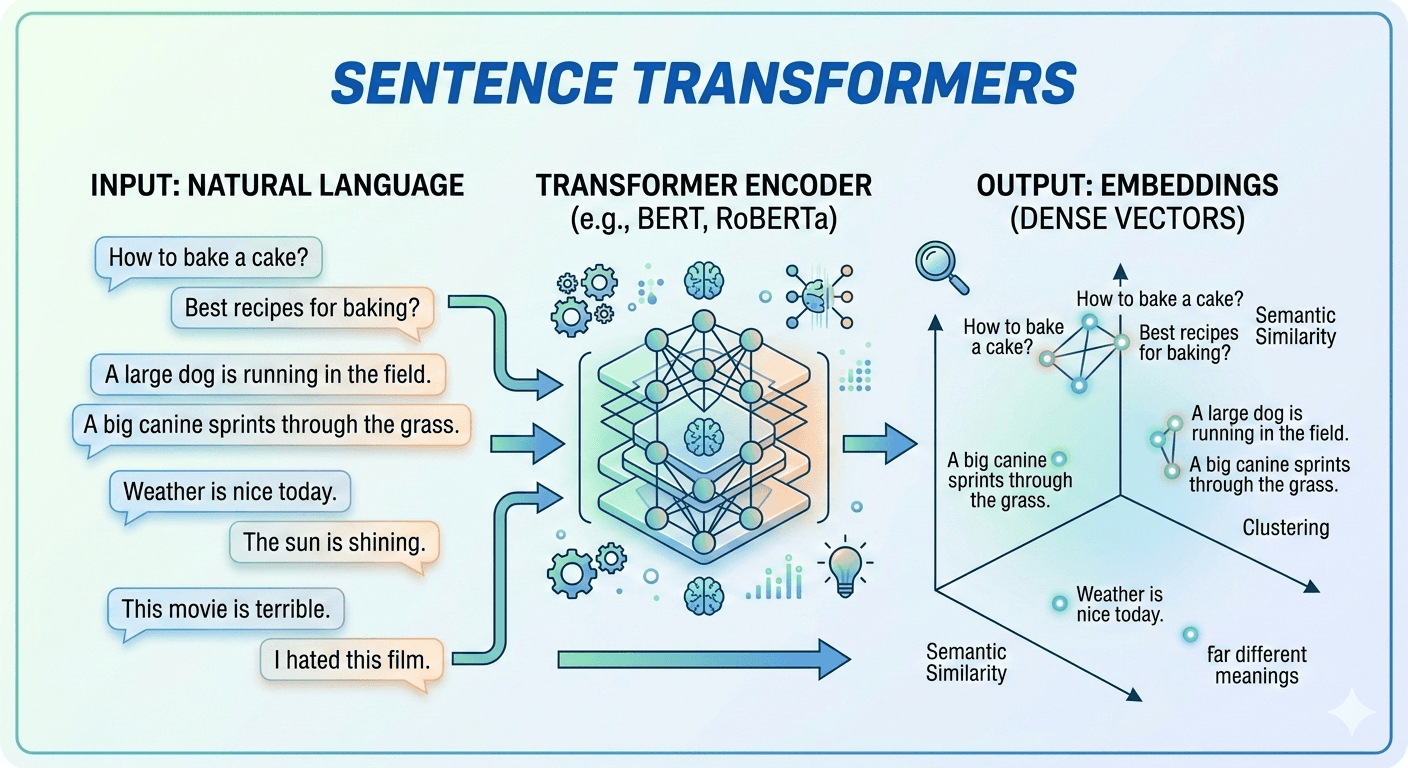
all-MiniLM-L6-v2 is one of the most widely used sentence embedding models for lightweight semantic search systems.
It converts sentences and short paragraphs into dense vectors so you can compare meaning with cosine similarity instead of matching exact words.
Why Teams Use all-MiniLM-L6-v2
- small and fast model footprint
- strong baseline quality for semantic retrieval
- simple integration with
sentence-transformers - works well on CPU for many production workloads
Model Snapshot
According to the Hugging Face model card, this model:
- outputs 384-dimensional embeddings
- is intended for sentence and short paragraph encoding
- truncates input longer than 256 word pieces by default
- is published under Apache-2.0
Model card: https://huggingface.co/sentence-transformers/all-MiniLM-L6-v2
Quick Python Example
from sentence_transformers import SentenceTransformer
from sklearn.metrics.pairwise import cosine_similarity

model = SentenceTransformer("sentence-transformers/all-MiniLM-L6-v2")

texts = [
    "How do I reset my password?",
    "I forgot my login credentials",
    "Best way to deploy a Next.js app"
]

embeddings = model.encode(texts)
score = cosine_similarity([embeddings[0]], [embeddings[1]])[0][0]

print(f"Similarity: {score:.4f}")
Practical Use Cases
- semantic search over docs, FAQs, and tickets
- duplicate detection in support systems
- intent grouping and clustering
- RAG retrieval layer before LLM generation
Production Notes
- Normalize and store embeddings in a vector database (for example Qdrant, Pinecone, or pgvector).
- Keep chunk sizes short enough to preserve meaning per vector.
- Evaluate retrieval quality with real user queries, not synthetic examples only.
- Re-embed content in batches when you change chunking strategy.
Final Take
If you need a fast, reliable default embedding model for English sentence-level retrieval, all-MiniLM-L6-v2 is still one of the most practical starting points.