
Infrastructure
AWS EC2: Practical Guide for Hosting and Scaling Apps
Editor | March 2, 2026 | 4 min read
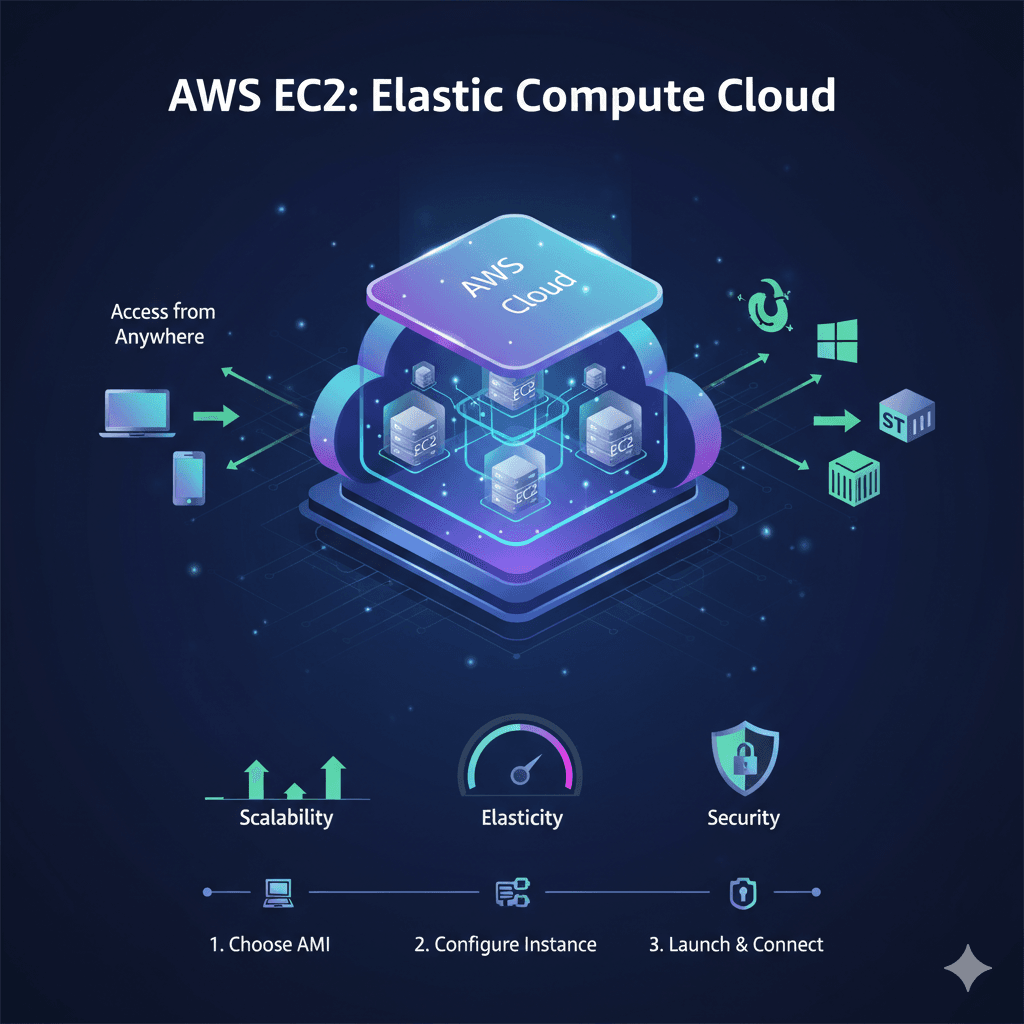
Amazon EC2 (Elastic Compute Cloud) is AWS's core virtual server service. It gives you full control over compute, networking, storage choices, and operating system level configuration.
For teams moving from shared hosting or managed platforms, EC2 is often the first step into flexible cloud infrastructure.
Why Teams Choose EC2
- full control over server environment and runtime
- broad instance type options for different workloads
- easy integration with other AWS services
- supports both simple single-instance apps and larger distributed systems
EC2 is not the easiest option, but it gives strong flexibility when your app requirements are evolving.
Common Use Cases
- hosting frontend and backend services
- API and microservice workloads
- background jobs and workers
- dev/staging environments that match production closely
Practical Launch Flow
- Pick an instance type that matches your CPU and memory needs.
- Choose a secure base image (for example Amazon Linux or Ubuntu LTS).
- Configure security groups with least-privilege ports.
- Attach storage and set backup/snapshot strategy.
- Deploy application and process manager (
systemd, PM2, Docker, etc.). - Add reverse proxy and HTTPS for production traffic.
Security Baseline
- allow SSH only from trusted IP addresses
- use IAM roles instead of hard-coded AWS keys
- keep OS packages and dependencies updated
- disable unused ports and services
- enable monitoring and centralized logs
Security group discipline and patching cadence matter as much as application code quality.
Cost Control Tips
- start small, then scale based on metrics
- stop non-production instances when idle
- right-size instance families periodically
- monitor spend with AWS Budgets and CloudWatch alarms
Final Take
AWS EC2 is a strong default when you need control, flexibility, and a clear path to scale. If your team can handle operations responsibly, EC2 gives long-term infrastructure freedom.