
Development
Levenshtein Algorithm: Measure Edit Distance Between Strings
Editor | March 1, 2026 | 6 min read
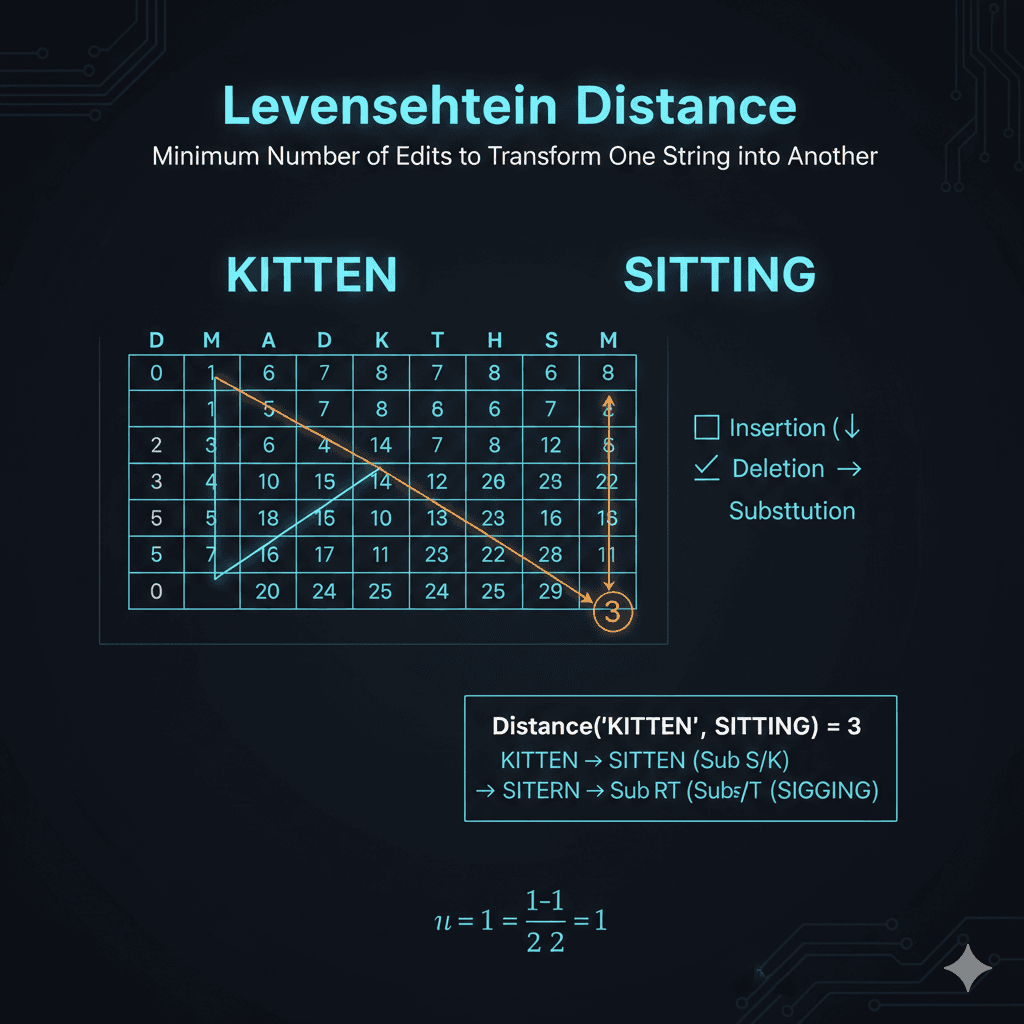
The Levenshtein algorithm computes the edit distance between two strings: the minimum number of single-character edits required to transform one string into the other.
Allowed operations are:
- insertion
- deletion
- substitution
It is commonly used in spell checkers, fuzzy search, OCR cleanup, and typo-tolerant matching.
Core Idea
Levenshtein uses dynamic programming. Build a matrix where:
- rows represent characters of string A
- columns represent characters of string B
- each cell stores the minimum edit cost up to that point
The final cell gives the distance.
Recurrence
For dp[i][j]:
- if characters match, cost is
dp[i - 1][j - 1] - otherwise take
1 + min(dp[i - 1][j](deletion),dp[i][j - 1](insertion),dp[i - 1][j - 1](substitution))
JavaScript Implementation
export function levenshteinDistance(a, b) {
  if (typeof a !== "string" || typeof b !== "string") {
    throw new TypeError("Inputs must be strings")
  }

  const rows = a.length + 1
  const cols = b.length + 1

  const dp = Array.from({ length: rows }, () => Array(cols).fill(0))

  for (let i = 0; i < rows; i += 1) dp[i][0] = i
  for (let j = 0; j < cols; j += 1) dp[0][j] = j

  for (let i = 1; i < rows; i += 1) {
    for (let j = 1; j < cols; j += 1) {
      const cost = a[i - 1] === b[j - 1] ? 0 : 1

      dp[i][j] = Math.min(
        dp[i - 1][j] + 1,
        dp[i][j - 1] + 1,
        dp[i - 1][j - 1] + cost
      )
    }
  }

  return dp[a.length][b.length]
}
Example
console.log(levenshteinDistance("kitten", "sitting")) // 3
console.log(levenshteinDistance("flaw", "lawn")) // 2
Similarity Score (Optional)
You can convert distance to a normalized similarity score:
function levenshteinSimilarity(a, b) {
  const distance = levenshteinDistance(a, b)
  const maxLen = Math.max(a.length, b.length)

  if (maxLen === 0) return 1

  return 1 - distance / maxLen
}
This returns a value between 0 and 1.
Practical Notes
- Time complexity is
O(m * n)for strings of lengthmandn. - Memory can be optimized to two rows if you only need the final distance.
- For ranking many candidates, combine Levenshtein with indexing or prefix filters.
Final Take
Use Levenshtein when you need typo-tolerant matching and a clear edit-based measure of string difference. It is simple, interpretable, and effective in many real-world text pipelines.