
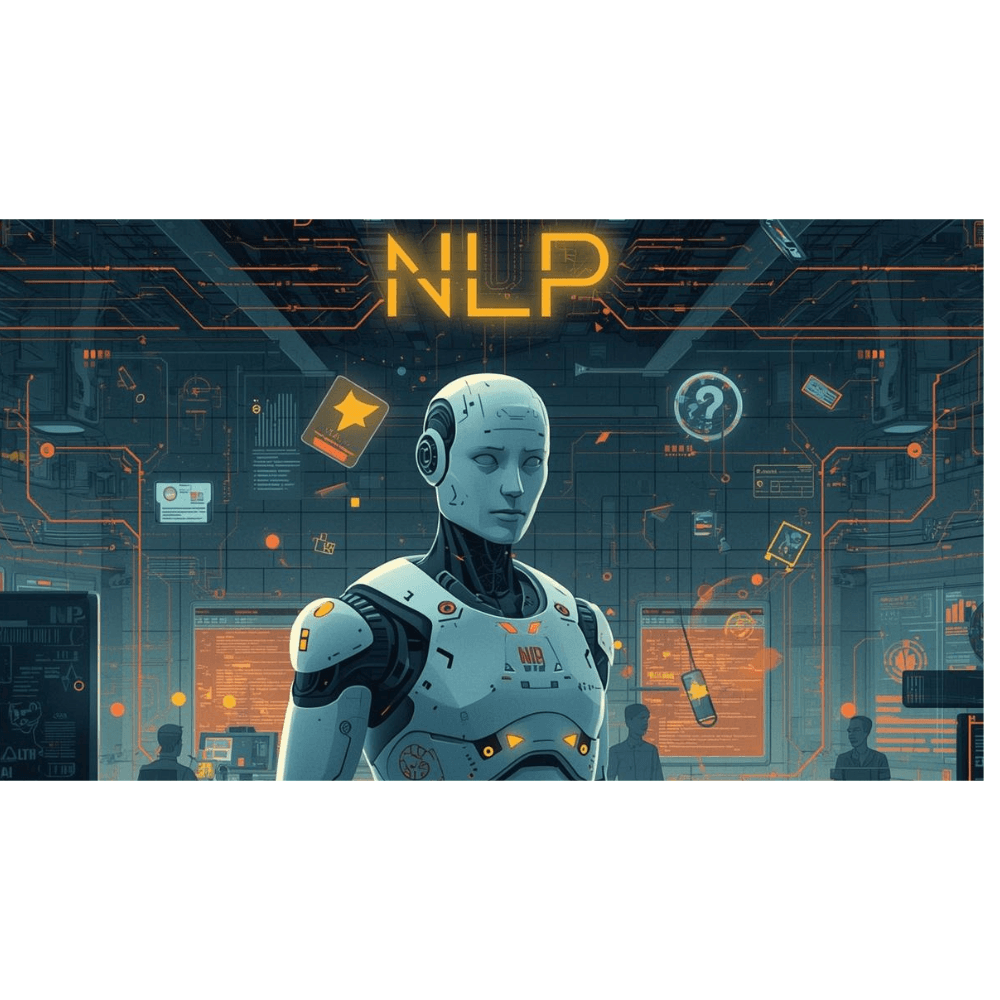
NLP: Practical Foundations for Language-Aware AI Products
Editor | February 26, 2026 | 3 min read
Natural Language Processing (NLP) is the part of AI focused on understanding and generating human language. It powers many core product features, from search relevance and document tagging to chat assistants and support automation.
For product teams, NLP is less about theory and more about building reliable workflows around messy real-world text.
Why NLP Matters
Most businesses run on language data:
- support conversations
- emails and docs
- product feedback
- internal knowledge bases
NLP converts this unstructured text into useful signals teams can search, classify, summarize, and act on.
Common NLP Use Cases
Teams usually start with high-impact patterns:
- text classification (intent, topic, sentiment)
- entity extraction (names, dates, products)
- semantic search and retrieval
- summarization for long documents
- question-answering over internal content
The goal is to reduce manual reading and improve decision speed.
Practical Implementation Flow
- Define one measurable text task.
- Prepare and clean representative data.
- Evaluate baseline models before optimizing.
- Add monitoring for drift and quality changes.
This keeps NLP work tied to business outcomes instead of model experimentation alone.
Production Considerations
- Build human review loops for sensitive outputs.
- Track precision/recall, not just overall accuracy.
- Protect privacy and handle PII safely.
- Re-evaluate prompts/models as data changes.
Strong operational discipline matters more than choosing a trendy model.
Final Take
NLP is one of the most practical AI capabilities for modern products. Teams that treat it as a measurable system, not a demo feature, get the most reliable long-term value.